
Here’s How Retailers and Manufacturers Can Join the Circular Economy
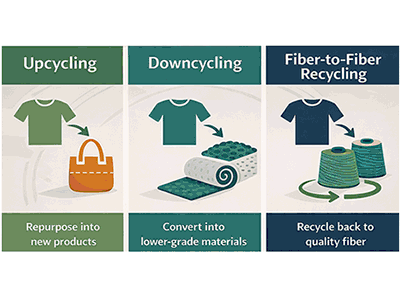
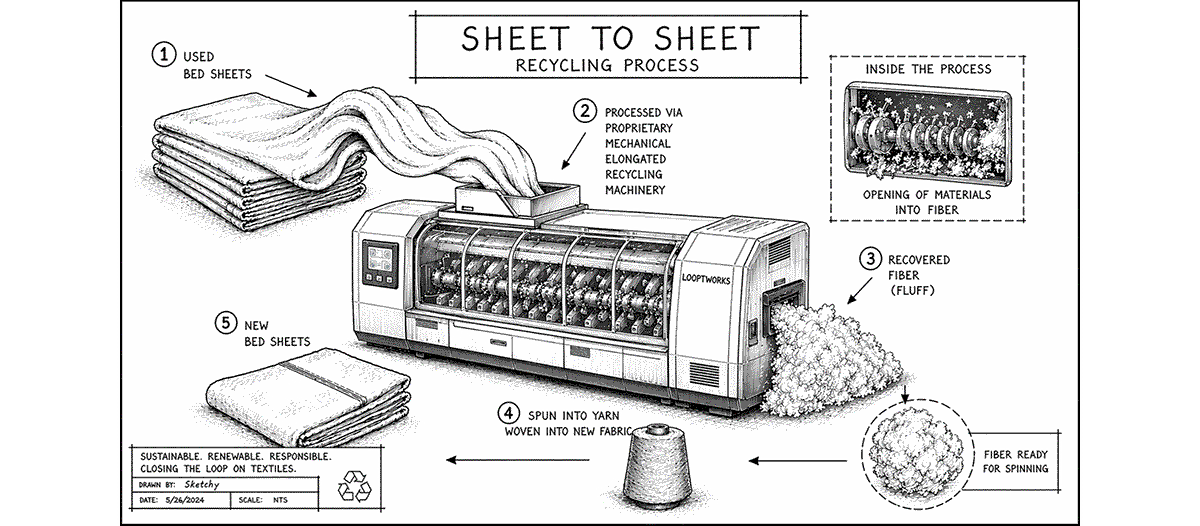
Is excess inventory piling up? It certainly doesn’t have to go to waste. Looptworks specializes in transforming unsold and overstocked textiles into innovative new fibers, effectively closing the loop in production and unlocking significant value in the process. By participating in this circular economy initiative, retailers and manufacturers can not only reduce waste but also contribute to a more sustainable future for the fashion industry.
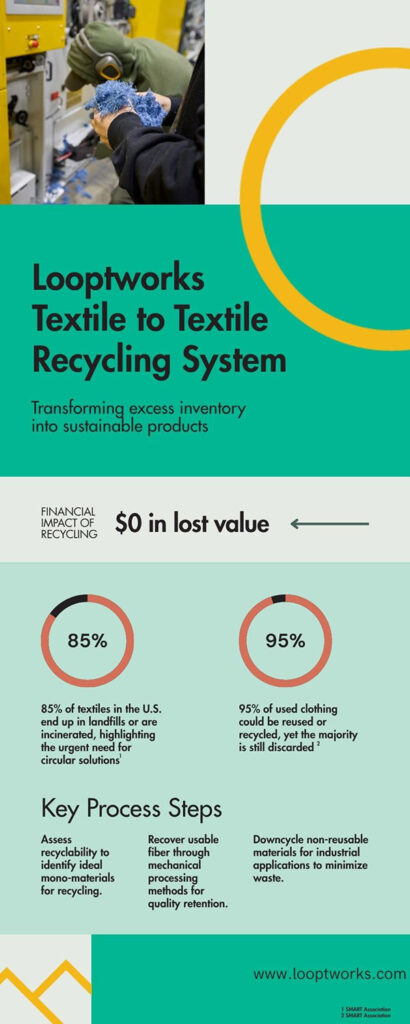
For retailers and manufacturers, excess inventory is more than just a logistics problem—it’s a liability. Overstocked goods tie up capital, occupy space, and, if left unmanaged, often end up in landfills or incinerators. This results in environmental damage, lost value, and increased pressure from consumers and regulators demanding better outcomes. Traditional offloading solutions—discounting, jobbers, or export—don’t cut it anymore.
The question isn’t just how to get rid of it. It’s about doing it responsibly, transparently, and with long-term brand value in mind.
Looptworks offers a better path forward: turning your excess inventory into raw material for future products. As a textile-to-textile recycler, Looptworks is building the infrastructure and systems to:
Reduce Waste Costs
Avoid the high financial and environmental cost of landfilling or incineration.
Meet Sustainability Goals
Turn unsold inventory into an opportunity to advance ESG commitments and circularity targets.
Protect Brand Integrity
Ensure excess inventory doesn’t flood off-price or gray markets where it could harm your pricing and reputation.
Close the Loop
Use recovered fiber in future collections or product lines—showing your customers you walk the talk.
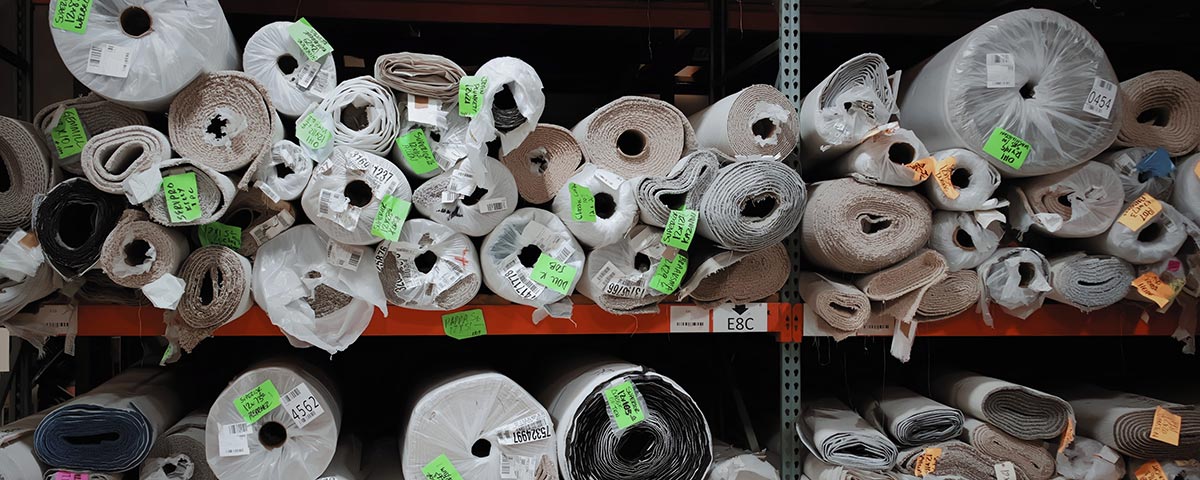
At Looptworks, we know that circularity only works if it’s applied in real business. That’s why we’ve made our fiber-to-fiber recycling services practical, scalable, and easy to integrate. Whether you’re holding last season’s unsold inventory or unused fabric rolls from production overages, we’ll help you turn that material into a resource, not a write-off.
Join us in creating a closed-loop system where no textile is wasted. Learn more about our recycling solutions and how to partner with us.
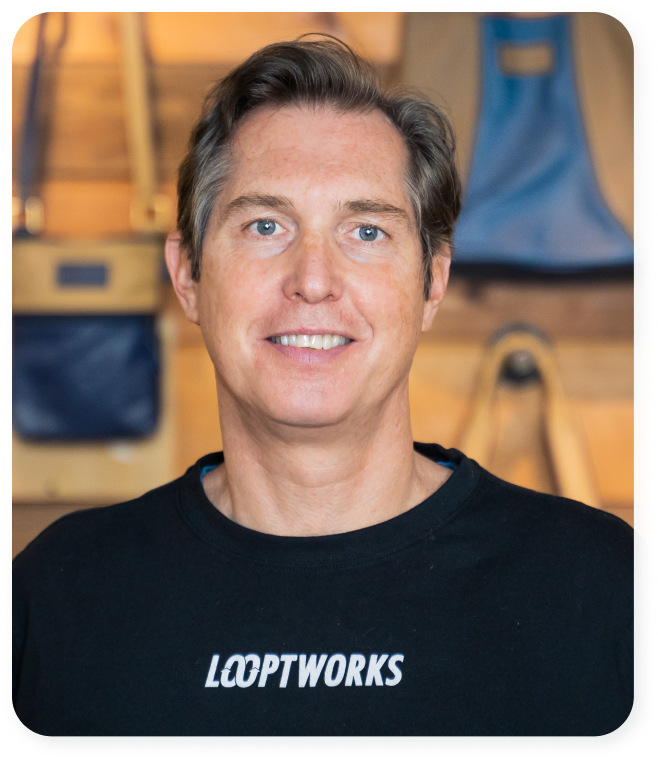
Scott is a visionary leader with more than 32 years of experience in strategic branding, innovative product creation, supply chain sustainability, and sales and marketing for global organizations. He founded Looptworks in 2009 as an industry solution for turning excess materials into upcycled consumer products. In 2022, Scott transitioned the company to a B2B business model focused on eliminating global textile waste through closed-loop solutions.
Scott is a visionary leader with more than 32 years of experience in strategic branding, innovative product creation, supply chain sustainability, and sales and marketing for global organizations. He founded Looptworks in 2009 as an industry solution for turning excess materials into upcycled consumer products. In 2022, Scott transitioned the company to a B2B business model focused on eliminating global textile waste through closed-loop solutions.