Not every textile can follow the same recycling path. At our operating facility in Gresham, Oregon, Looptworks processes a wide range of natural, synthetic, and blended materials, matching each material to its next best use. From fiber-to-fiber recycling to durable nonwoven applications, our work produces high-quality Loopt™ Fiber for manufacturers while keeping more textiles in productive use.
Tackling Textile Waste at Scale
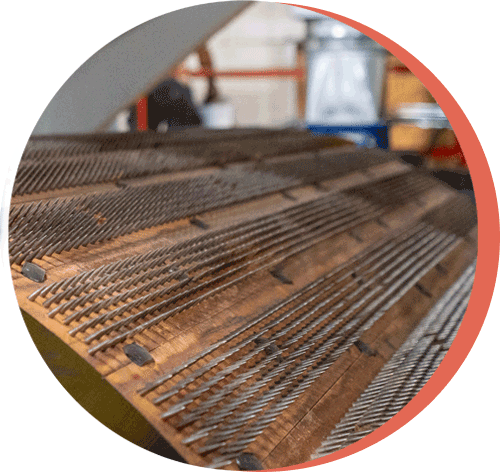
At our 90,000-square-foot facility in Gresham, Oregon, we process pre- and post-consumer textiles using our proprietary technology of elongated mechanical recycling. This approach allows us to work with a wide range of materials, including cotton, polyester, wool, and blends, producing high-quality recycled fiber for yarn spinning and nonwoven manufacturing.
Fiber-to-Fiber Recycling
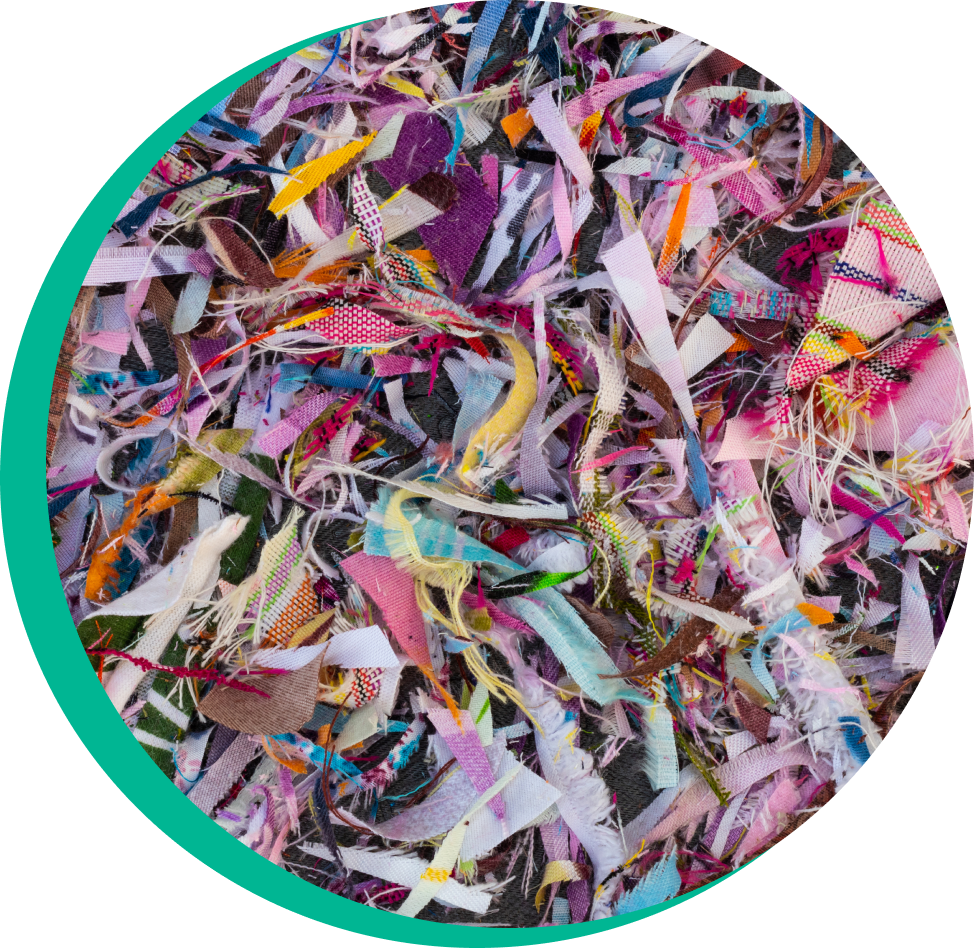
We turn excess textiles into fibers that are used to create new products. We utilize industrial, pre-consumer, and post-consumer textile waste streams, which means our process begins when others end.
Since each waste stream is unique, we have developed our technology to produce different circular fibers across the value chain. Depending on the input material we receive, we produce high-quality spinning, staple, or nonwoven fiber that is fully recycled and therefore truly circular.
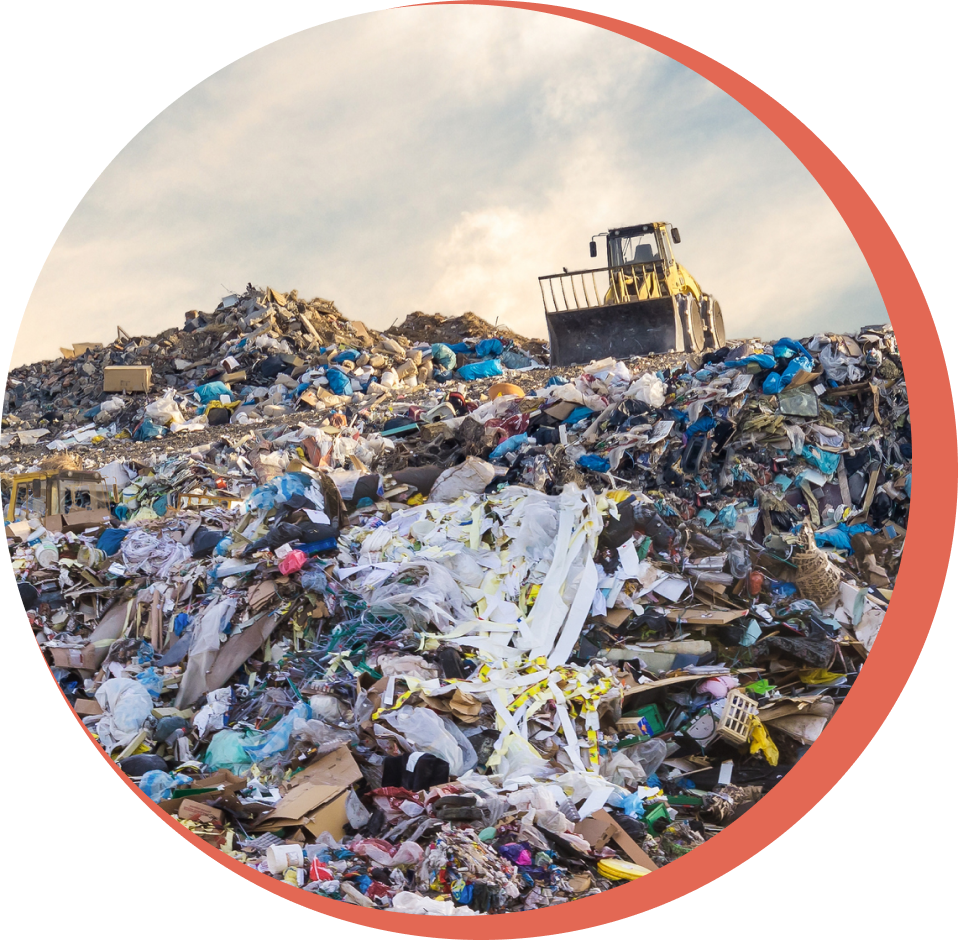
We support businesses that are designing products with circularity and end-of-life processing in mind. But until sustainable design becomes mainstream, not every material and waste stream in the world can be turned back into a spinnable fiber. For this reason, we are excited to offer a vertical downcycling solution that extends the life of lower-quality materials and helps companies avoid landfills.
As we extend our textile recycling processes to a wider variety of input materials, we are constantly looking for ways to improve our operations. We are setting the pace with technological advancements in automation, robotics, and AI, which will increase efficiency in capacity, resources, and cost.
Take Your Textile Company Circular
If you have a waste stream you would like to keep out of the landfill, let’s work together to find a zero-waste solution for your excess material.
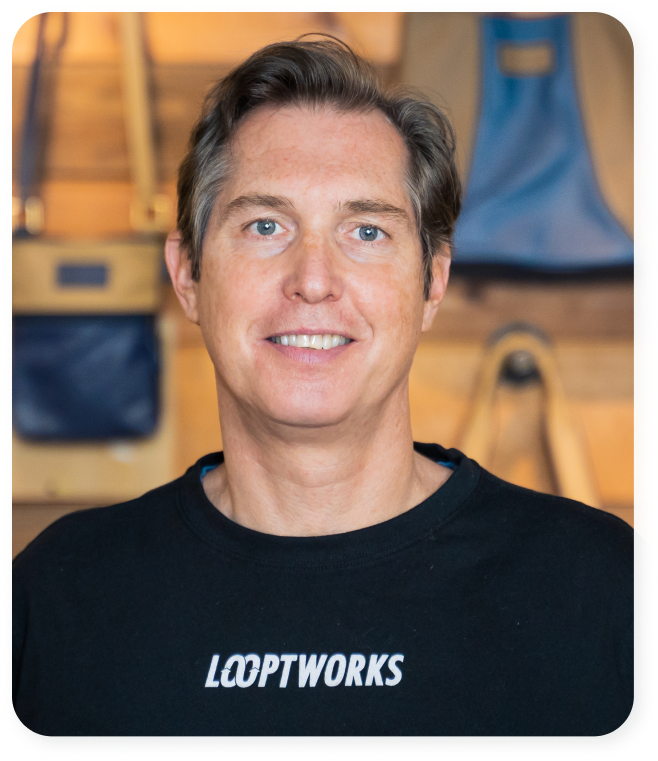
Scott is a visionary leader with more than 32 years of experience in strategic branding, innovative product creation, supply chain sustainability, and sales and marketing for global organizations. He founded Looptworks in 2009 as an industry solution for turning excess materials into upcycled consumer products. In 2022, Scott transitioned the company to a B2B business model focused on eliminating global textile waste through closed-loop solutions.
Scott Hamlin
Founder & CEO
Scott is a visionary leader with more than 32 years of experience in strategic branding, innovative product creation, supply chain sustainability, and sales and marketing for global organizations. He founded Looptworks in 2009 as an industry solution for turning excess materials into upcycled consumer products. In 2022, Scott transitioned the company to a B2B business model focused on eliminating global textile waste through closed-loop solutions.