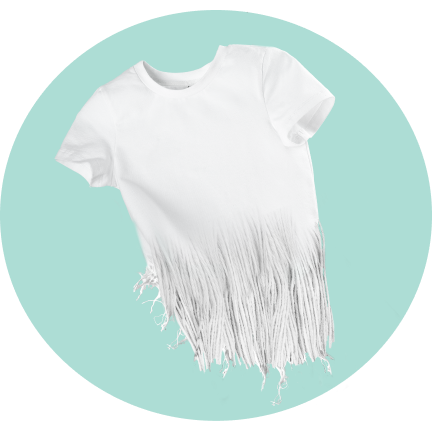
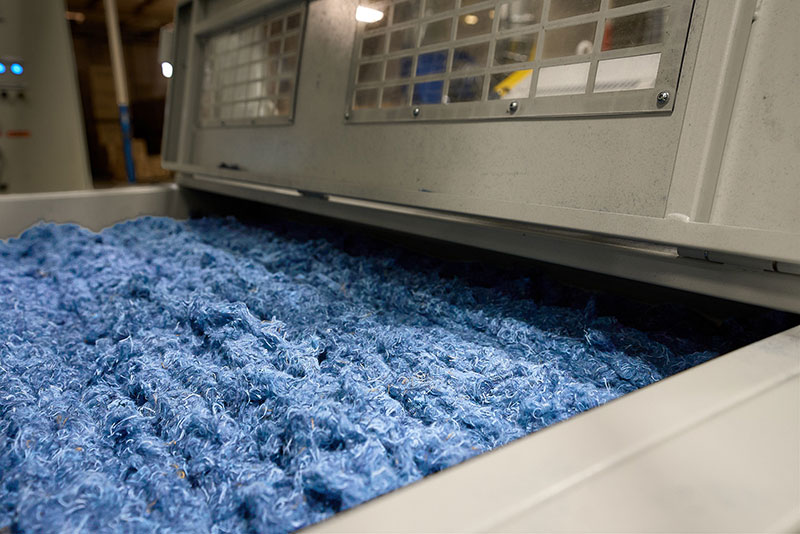
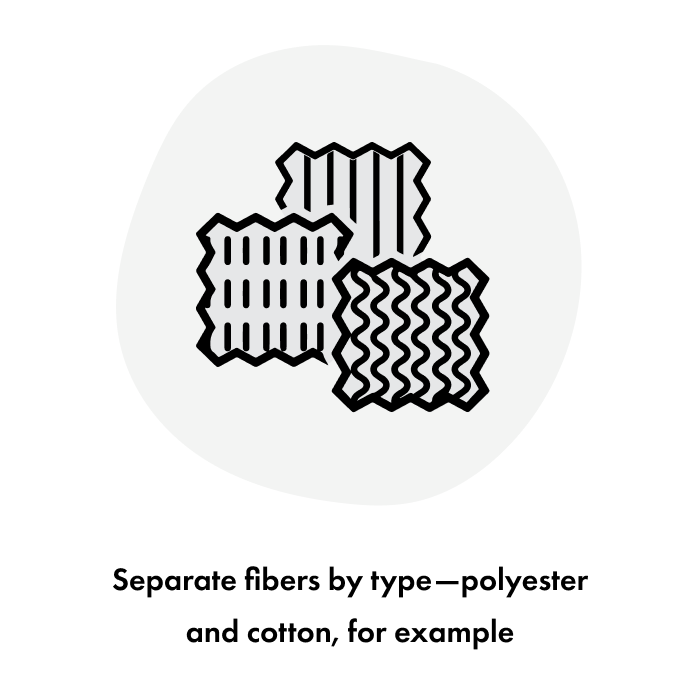
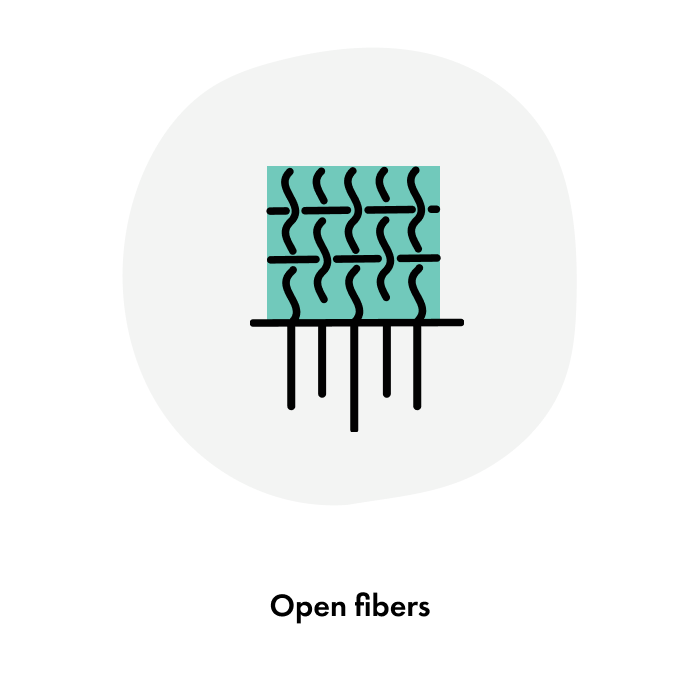
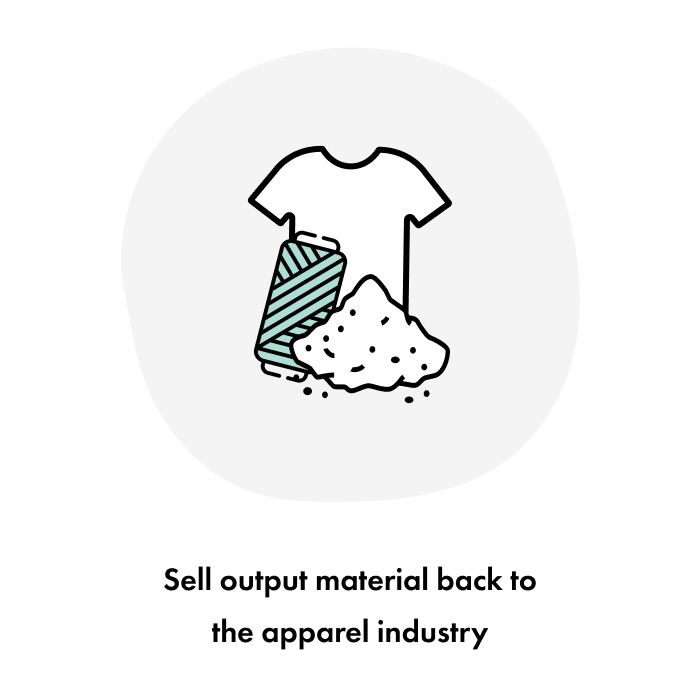
Through fiber-to-fiber recycling, we break down excess and end-of-life textiles into fibers that can be used to make new garments.
This process will transform the textile industry. By supporting our regenerative system, textile waste is drastically reduced. The materials used to make new clothes are sourced from existing ones, and end-of-life clothing is a new beginning rather than a waste stream destined for landfill. Since 2009, Looptworks has helped keep 5,626,260 pounds of material out of landfills.
Explore Our Fiber-to-Fiber Process
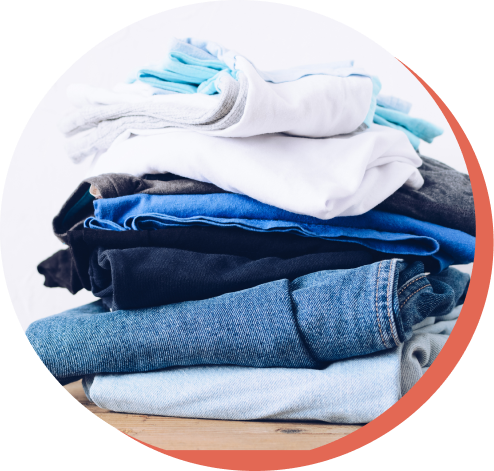
Input Materials We Work With
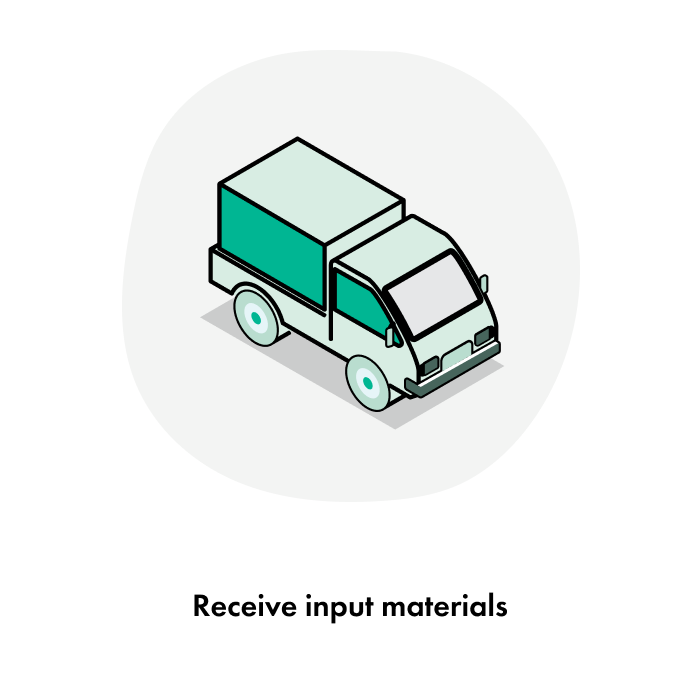
Looptworks sources materials made from natural/cellulosic and synthetic fibers, including cotton, polyester, cotton/polyester blends, nylon, wool, and acrylic.
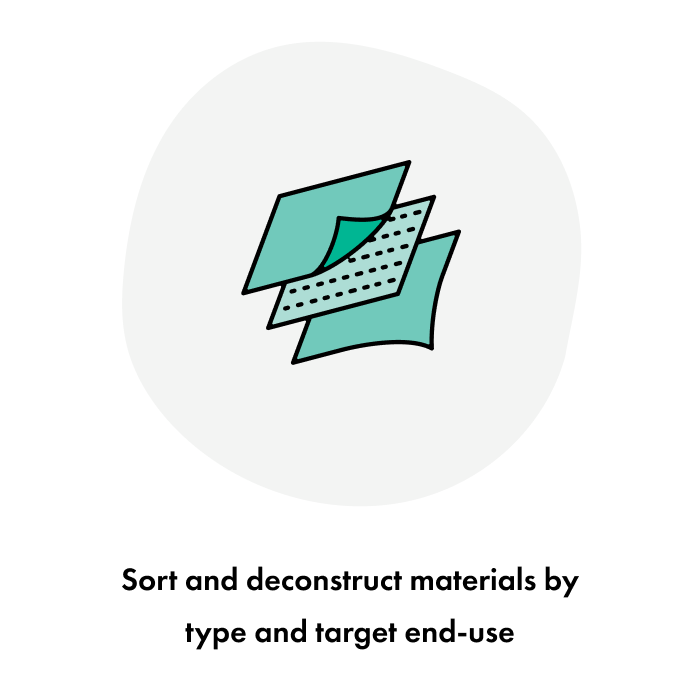
We accept both pure feedstock, materials that do not require sorting or deconstruction, and blended feedstock, materials that need to be sorted and deconstructed on a project-by-project basis.
Our Output Materials
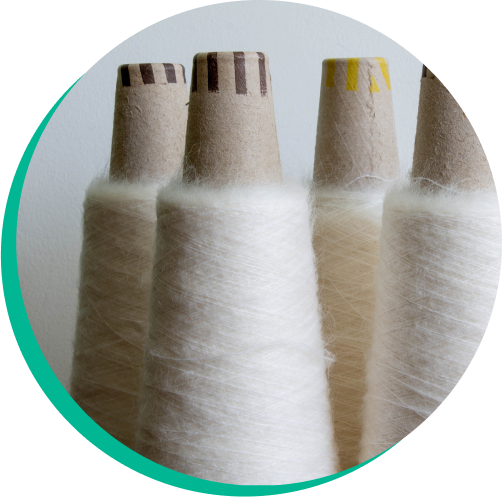
Looptworks creates the highest-quality output fibers. Depending on the input materials, the feedstock we produce through our mechanical fiber-to-fiber recycling process can become:
Spinning Fiber: Fibers are spun into recycled yarns for textile manufacturing.
Nonwoven Fiber: Fibers are used for insulation, lampshades, and other applications.
Interested in purchasing high-quality output fiber?
Looptworks has proudly opened a state-of-the-art facility in Gresham, OR, dedicated to delivering true circular solutions for the textile industry. This new operation features advanced fiber-to-fiber recycling technology, turning excess textiles back into high-quality fiber ready for reuse.
We are currently the only facility in the United States that combines both textile-to-textile recycling and strategic downcycling under one roof. This unique capability allows us to process a broader range of materials, keep more textiles out of landfills, and create high-value outputs that feed directly back into manufacturing.
It’s a major step toward making textile circularity not just possible—but scalable.
Let’s Close the Loop on Textile Waste
Looptworks sources materials made with natural and synthetic fibers in quantities of at least 2,200 pounds or 1 metric ton. Contact us today, and we’ll help you find a sustainable solution for your excess inventory.
Scott is a visionary leader with more than 32 years of experience in strategic branding, innovative product creation, supply chain sustainability, and sales and marketing for global organizations. He founded Looptworks in 2009 as an industry solution for turning excess materials into upcycled consumer products. In 2022, Scott transitioned the company to a B2B business model focused on eliminating global textile waste through closed-loop solutions.
Scott Hamlin
Founder & CEO
Scott is a visionary leader with more than 32 years of experience in strategic branding, innovative product creation, supply chain sustainability, and sales and marketing for global organizations. He founded Looptworks in 2009 as an industry solution for turning excess materials into upcycled consumer products. In 2022, Scott transitioned the company to a B2B business model focused on eliminating global textile waste through closed-loop solutions.