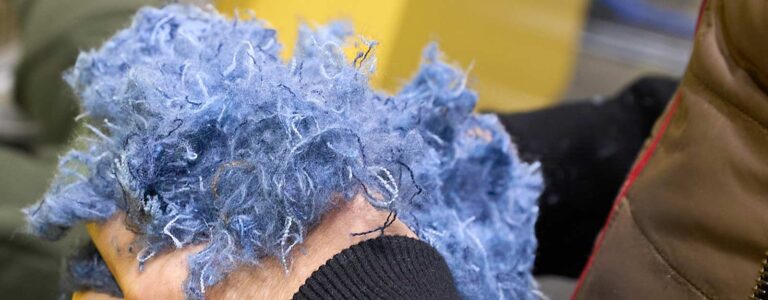
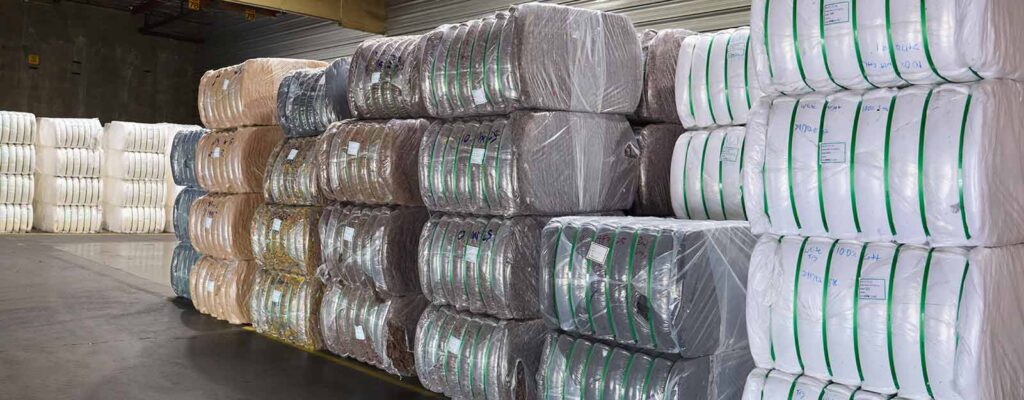
Loopt™ Fiber gives existing textiles a new purpose. Produced by Looptworks in Gresham, Oregon, our high-quality recycled fibers are ready for use in new yarns, nonwoven materials, and other manufactured products.
From cotton and denim to polyester, wool, and blended textiles, Loopt™ Fiber connects existing textile resources with new manufacturing opportunities.
Different materials. Different applications. One commitment to quality and circularity.
What Is Loopt™ Fiber?
Loopt™ Fiber is the name behind the GRS-certified recycled fibers produced at the Looptworks facility for circular manufacturing applications.
Each material has different characteristics and manufacturing requirements. We evaluate and test materials before production, tailoring our process to their intended use.
The result is a family of recycled fibers designed for a wide range of manufacturing applications.
Many Materials. More Possibilities.
Loopt™ Fiber can be produced from cotton, denim, polyester, wool, and fiber blends.
Some fibers return to textile manufacturing through yarn spinning. Others become raw materials for nonwoven products, including insulation, carpet padding, and acoustic materials.
Both applications keep existing textile resources in productive use.
Quality That Supports Circularity
Recycled fiber must do more than divert textiles from landfills. It must perform in its next application.
At Looptworks, quality begins before production. We evaluate incoming materials, conduct testing, and determine the recycling process best suited to the intended end use.
Our team focuses on consistency, fiber quality, and manufacturing requirements throughout production.
This commitment helps customers incorporate recycled materials into new products with confidence.
GRS-Certified Recycled Fiber, Made in the USA
Loopt™ Fiber is produced at our 90,000-square-foot textile recycling facility in Gresham, Oregon.
Looptworks holds Global Recycled Standard (GRS) certification, supporting verified recycled content, traceability, and responsible processing within the certified supply chain.
We’ve also been a Certified B Corporation since 2012, reflecting our longstanding commitment to environmental and social responsibility.
For manufacturers, these credentials support more transparent sourcing and responsible material choices.
Built on Trusted Industry Partnerships
Looptworks works with brands, manufacturers, and industry partners to give existing textiles a new purpose.
These relationships help advance textile circularity and create new opportunities for high-quality recycled materials like Loopt™ Fiber.
Look for Loopt™ Fiber
You may encounter the Loopt™ Fiber name on a product label, in a manufacturer’s material description, or through a brand’s sustainability story.
That name connects the recycled fiber in a product to Looptworks and our work in textile circularity.
Whether used in clothing, home goods, or industrial applications, Loopt™ Fiber represents an opportunity to keep existing textile materials in productive use.
Build With Loopt™ Fiber
Looking for recycled fiber for your next manufacturing project?
Our team works with spinning mills, nonwoven manufacturers, and brands to develop recycled fiber solutions tailored to their material requirements.
Contact Looptworks to explore how Loopt™ Fiber can support your material needs.
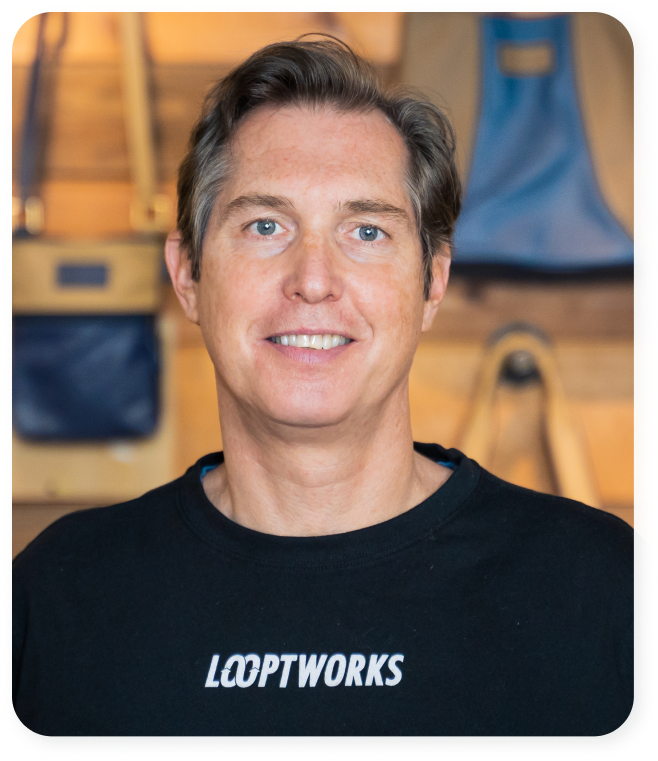
Scott is a visionary leader with more than 32 years of experience in strategic branding, innovative product creation, supply chain sustainability, and sales and marketing for global organizations. He founded Looptworks in 2009 as an industry solution for turning excess materials into upcycled consumer products. In 2022, Scott transitioned the company to a B2B business model focused on eliminating global textile waste through closed-loop solutions.
Scott Hamlin
Founder & CEO
Scott is a visionary leader with more than 32 years of experience in strategic branding, innovative product creation, supply chain sustainability, and sales and marketing for global organizations. He founded Looptworks in 2009 as an industry solution for turning excess materials into upcycled consumer products. In 2022, Scott transitioned the company to a B2B business model focused on eliminating global textile waste through closed-loop solutions.