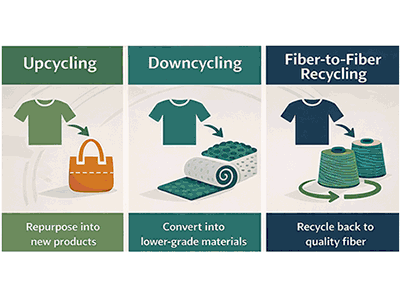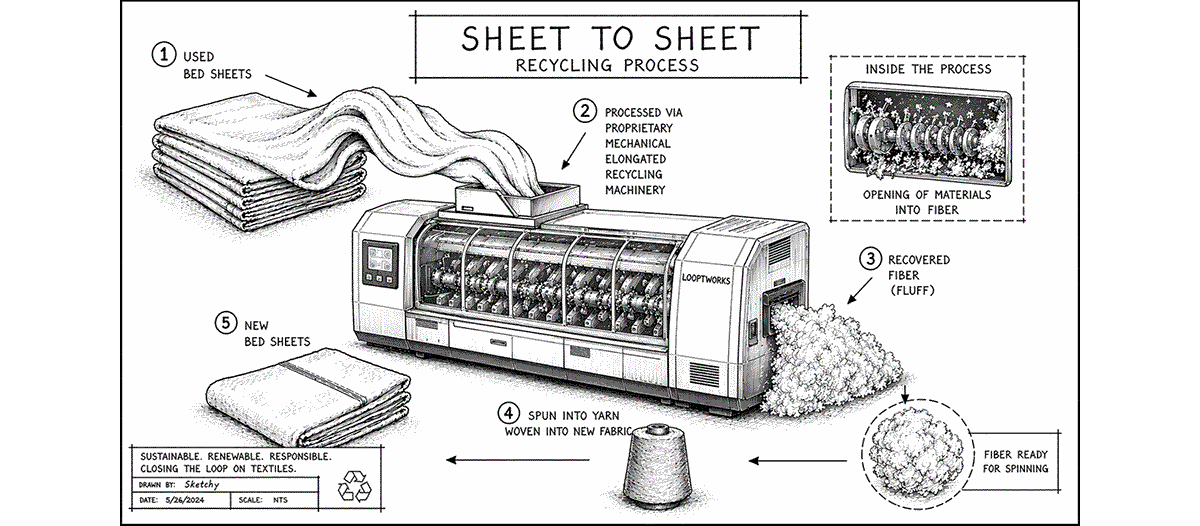

Note: This article reflects Looptworks’ earlier work in upcycling. Today, we focus on textile-to-textile recycling, producing high-quality recycled fiber for manufacturing applications.
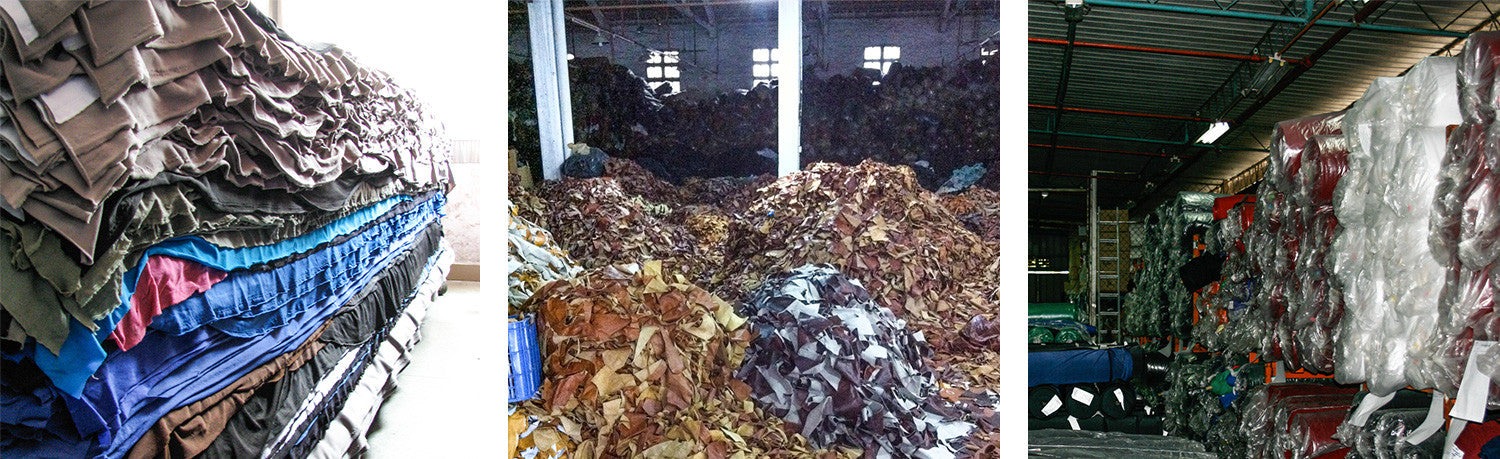
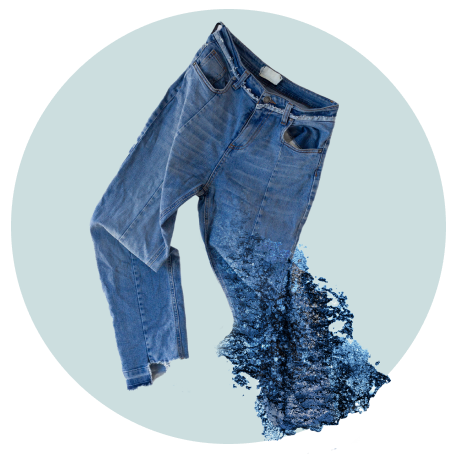
The Council for Textile Recycling reports that on average, each US citizen discards 70 lbs. of clothing and textiles annually. The U.S. EPA’s estimates reveal that textile waste occupies nearly 5% of all landfill space, referred to as post-consumer excess. While this is indeed a growing concern, it pales in comparison to the volume of new, pre-consumer materials disposed of yearly, commonly termed “deadstock.”
The precise extent of textile waste discarded before it enters production remains uncertain across the industry. However, it is acknowledged to be substantial. The question arises: where does this surplus originate from?
Case Study #1: Traditional Operations
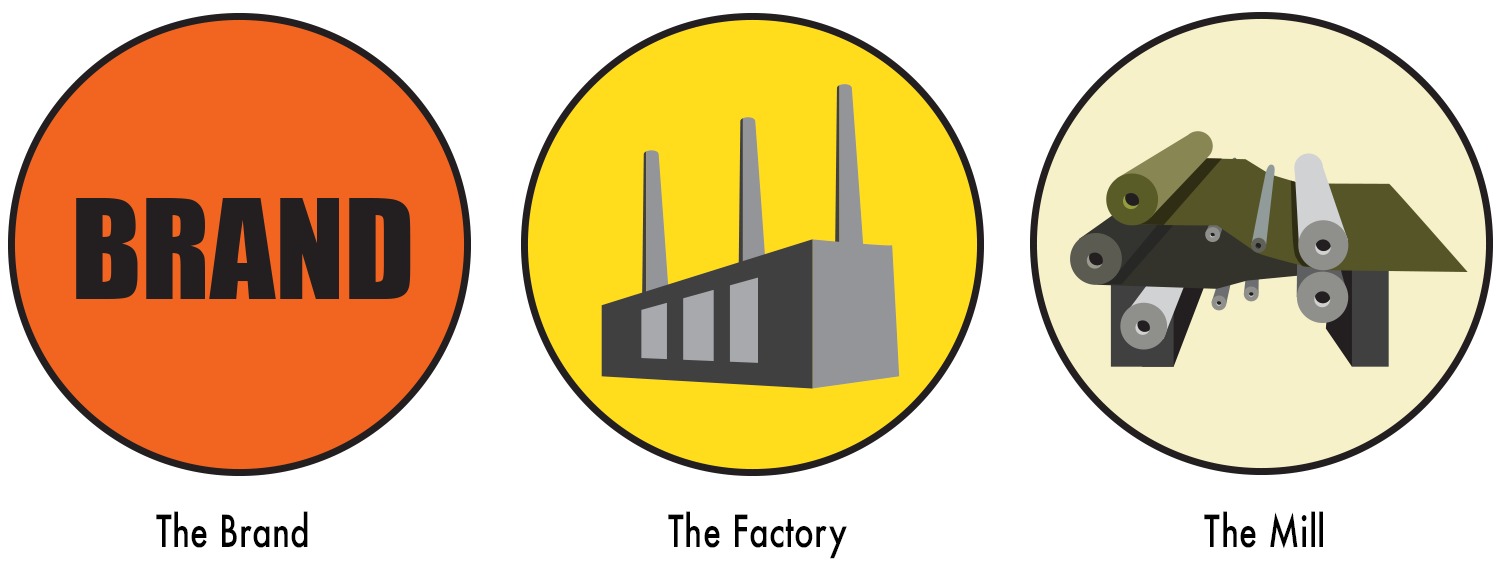
The key players in this scenario are the Brand, the Factory, and the Fabric Mill.
Here’s how it unfolds: The Brand approaches its trusted partner Factory with a specific request: “We’d like to produce this jacket using this material from this particular Mill.”
The Factory, in turn, liaises with the Mill, placing an order for the necessary fabric to fulfill the jacket production. Typically, the Mill produces an additional 3% to 5% of the fabric to accommodate any potential errors.
Once the fabric is ready, the Factory proceeds with the manufacturing process, creating the finished product, which is then shipped to the Brand’s warehouses. However, since the Factory usually orders a surplus of materials to ensure there’s enough, there’s often leftover fabric—around 3,000 to 5,000 yards for every 100,000 yards ordered.
Case Study #2: Order Adjustments
Once again, the Brand, Factory, and Mill are the main players.
Following a similar process, the Brand specifies its requirements to the Factory, who then communicates with the Mill to fulfill the order.
However, complications arise when the Brand alters its order—perhaps due to canceled retail contracts or dissatisfaction with color testing. Despite the changes, the Factory has already procured the materials from the Mill and incurred the associated costs.
This surplus material becomes a liability for the Factory, which must now manage the excess inventory. Despite already being compensated by the Brand for the materials, the Factory may charge storage fees, adding to the Brand’s expenses.
This situation results in what’s known as “Fabric Liability,” where the Brand effectively pays for the materials twice—once in the initial purchase order and again for storage.
Typically, the excess fabric is disposed of through incineration, landfilling, or selling it at minimal prices to fabric brokers, potentially impacting local industries in third-world countries. In some cases, it may even be illicitly reintroduced into production for knockoffs or counterfeit goods.
If you find your company has excess textiles please feel free to contact our Solutions Team >
Calling All Businesses with Excess Textiles If your business deals with excess textiles, our solutions team is eager to collaborate! Together, let’s weave a greener tapestry for generations to come.
We’d love to hear from you!
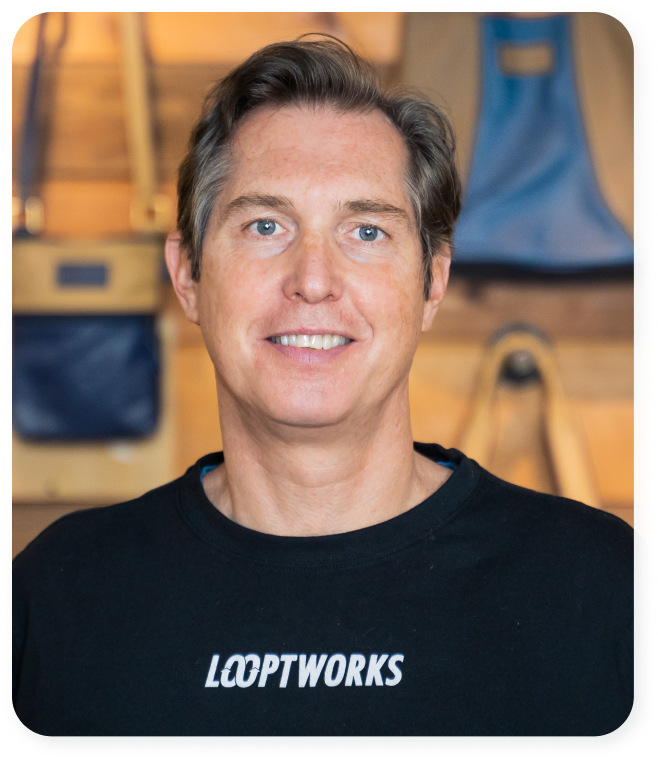
Scott is a visionary leader with more than 32 years of experience in strategic branding, innovative product creation, supply chain sustainability, and sales and marketing for global organizations. He founded Looptworks in 2009 as an industry solution for turning excess materials into upcycled consumer products. In 2022, Scott transitioned the company to a B2B business model focused on eliminating global textile waste through closed-loop solutions.
Scott is a visionary leader with more than 32 years of experience in strategic branding, innovative product creation, supply chain sustainability, and sales and marketing for global organizations. He founded Looptworks in 2009 as an industry solution for turning excess materials into upcycled consumer products. In 2022, Scott transitioned the company to a B2B business model focused on eliminating global textile waste through closed-loop solutions.