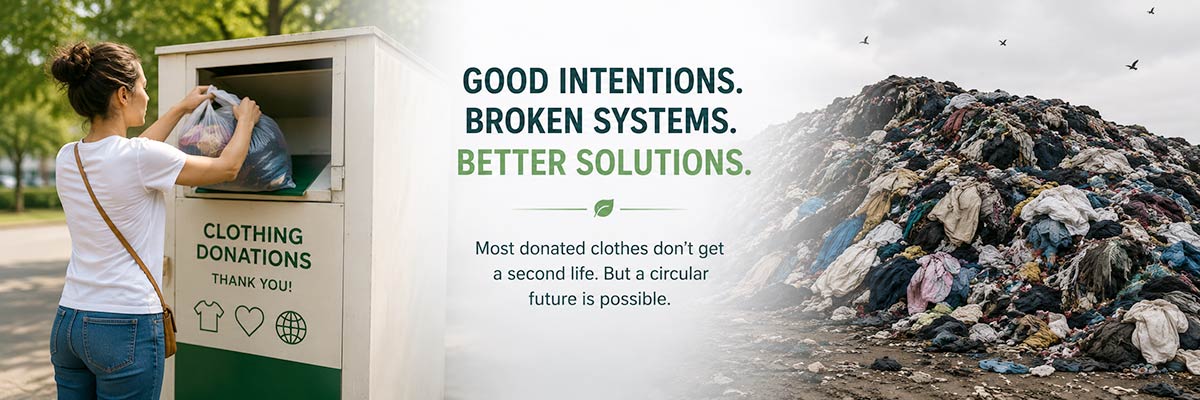

This image was created with ChatGPT
Every Earth Day brings attention to sustainability. However, real impact comes from action that scales.
This year, we’ve partnered with Naturepedic to make textile recycling simple, accessible, and effective for everyday consumers.
And it starts with something nearly everyone owns: bed sheets.
For many people, textile recycling feels complicated. Where do you take old sheets? What actually happens to them?
That’s where this partnership comes in.
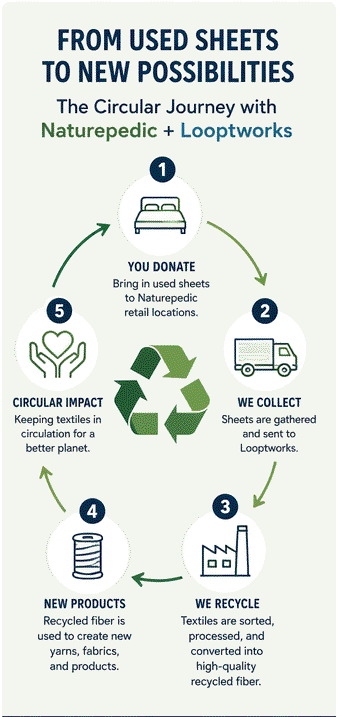
Through Naturepedic’s Earth Day “Sheet Swap” program, customers can bring in used sheets to retail locations. From there, we collect and process those materials through our textile recycling system.
As a result, unwanted textiles are kept out of landfills and reintroduced into the supply chain as usable fiber.
This is what a circular textile economy looks like in practice.
The need for scalable textile recycling is urgent.
Globally, 92 million tons of textile waste are generated each year. However, less than 1% of textiles are recycled into new materials.
In addition, textiles account for a growing share of landfill waste.
These numbers highlight a clear gap:
Therefore, partnerships between retailers and recyclers are essential to closing that gap.
This collaboration connects two critical parts of the system.
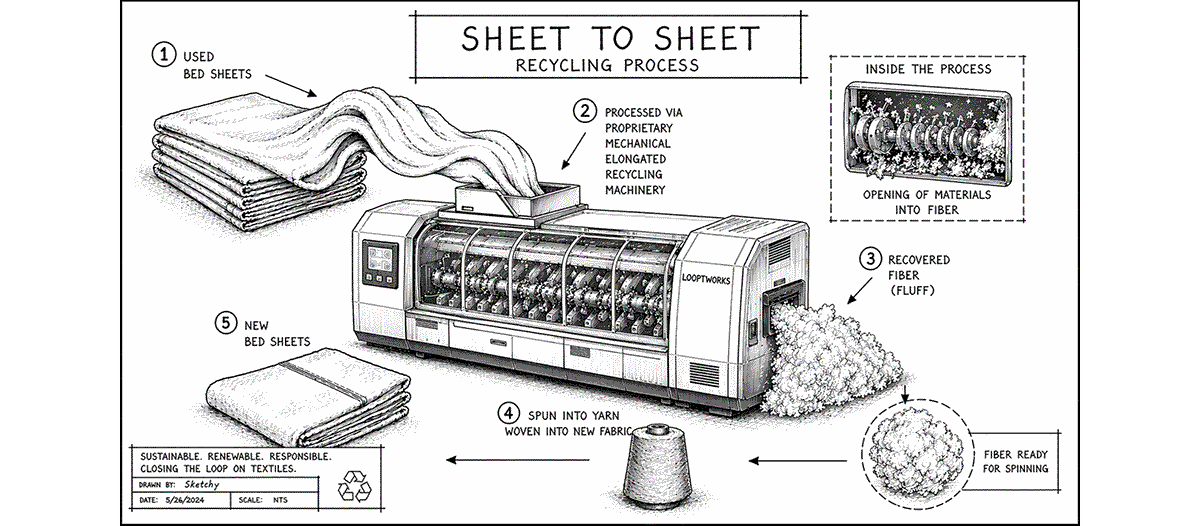
At our facility, discarded textiles are mechanically processed into high-quality recycled fiber. That fiber can then be used in new products, including yarns and nonwoven materials.
Because of this process, materials that would otherwise be discarded are kept in circulation.
In other words, waste becomes a resource.
Importantly, this program does more than offer convenience—it creates motivation.
Customers who participate in the Sheet Swap program receive discounts or even free sheets, depending on availability.
As a result, textile recycling becomes both practical and rewarding.
This approach helps shift behavior at scale:
Sustainability works best when it aligns with everyday decisions.
Textile recycling is not just a concept. It delivers measurable results.
To date, we have:
These outcomes demonstrate how circular systems can reduce environmental impact while supporting new material supply chains.
Furthermore, using recycled fiber reduces the need for virgin resources, which lowers overall environmental strain.
This Earth Day initiative represents more than a short-term campaign. Instead, it offers a model for the future.
To scale textile recycling, collaboration is required across the value chain:
When these elements align, the circular textile economy becomes achievable.
Moreover, consumers gain visibility into what happens after they discard a product. That transparency builds trust and drives continued participation.
Earth Day has always been about raising awareness. However, the next step is clear: action that delivers results.
Through this partnership, textile recycling becomes tangible. Consumers can participate. Materials stay in use. Environmental impact is reduced.
That is how circularity grows.
And sometimes, it starts with something as simple as a set of sheets.
If you’re looking for a smarter way to manage excess textiles—or want to integrate textile recycling into your supply chain—we’re here to help.
From retail take-back programs to large-scale recycling solutions, we work with brands and organizations to keep materials in circulation and out of landfills.
Reach out to us today!
Scott is a visionary leader with more than 32 years of experience in strategic branding, innovative product creation, supply chain sustainability, and sales and marketing for global organizations. He founded Looptworks in 2009 as an industry solution for turning excess materials into upcycled consumer products. In 2022, Scott transitioned the company to a B2B business model focused on eliminating global textile waste through closed-loop solutions.
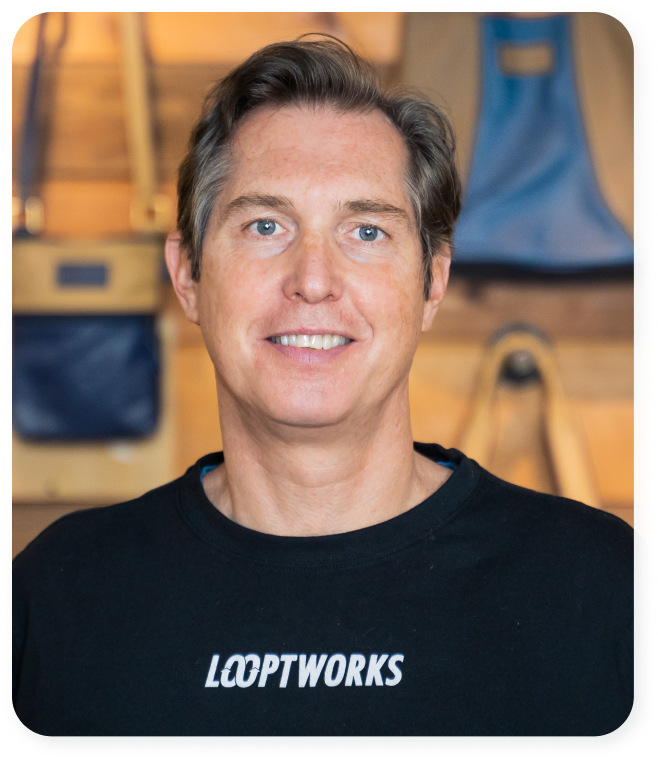
Scott is a visionary leader with more than 32 years of experience in strategic branding, innovative product creation, supply chain sustainability, and sales and marketing for global organizations. He founded Looptworks in 2009 as an industry solution for turning excess materials into upcycled consumer products. In 2022, Scott transitioned the company to a B2B business model focused on eliminating global textile waste through closed-loop solutions.