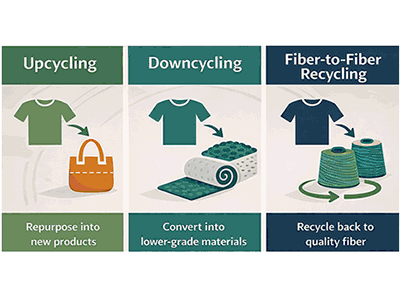

Textile waste is growing at a rapid pace. Millions of tons are discarded every year. Most of it ends up in landfill.
At the same time, the demand for raw materials continues to rise. This puts pressure on natural resources, energy systems, and global supply chains.
Textile recycling offers a scalable solution. It keeps materials in use and reduces the need for virgin inputs. As a result, it supports a more circular and responsible system.
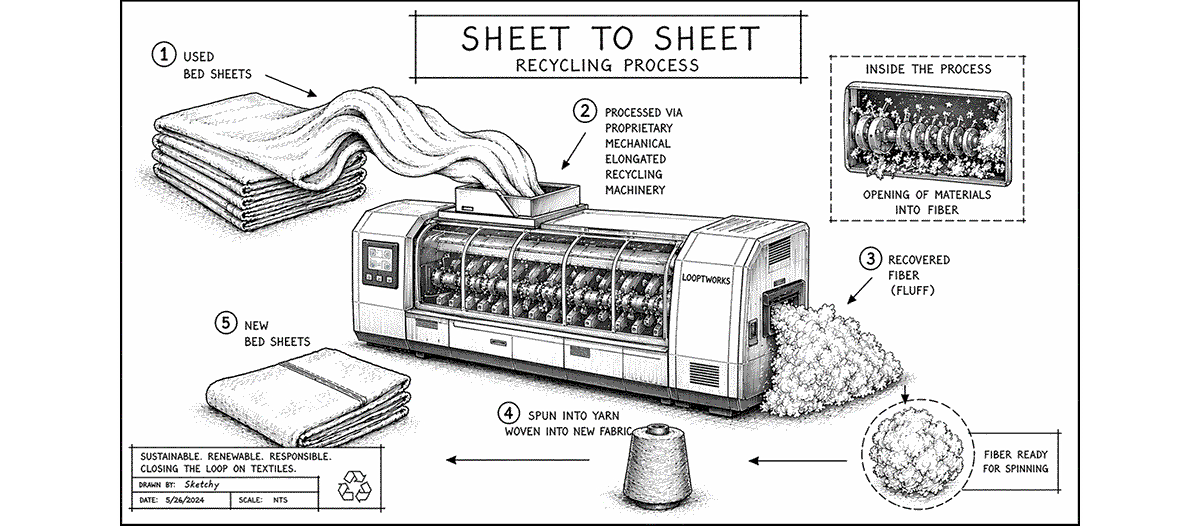
At Looptworks, we focus on turning discarded textiles into high-quality recycled fiber. Our process starts where others end. By recovering value from waste, we help reduce environmental impact at scale.
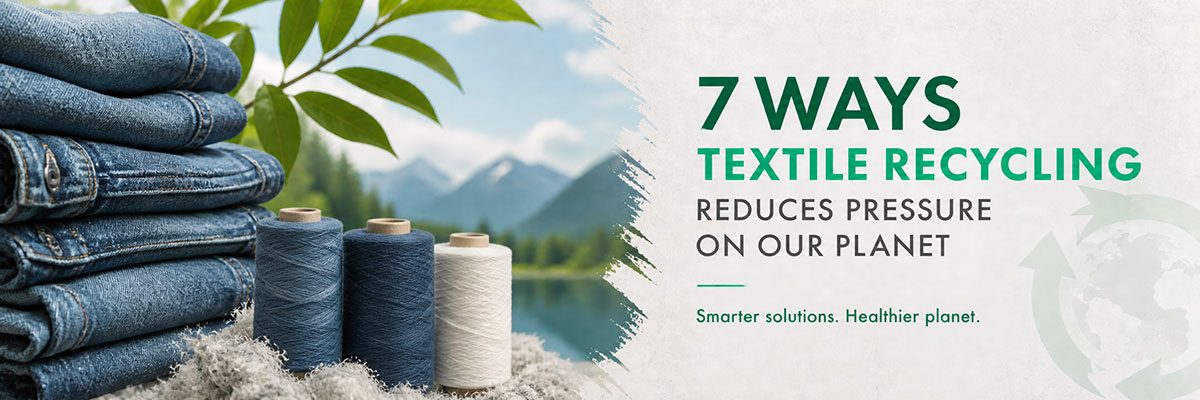
Below are seven ways textile recycling helps take pressure off our planet.
Landfills are filling up with discarded textiles. Many of these materials could still be used.
Textile recycling diverts waste from landfills. Instead of disposal, materials are recovered and processed into new fiber.
This reduces landfill volume. It also limits long-term environmental harm.
Producing new materials requires energy. It also creates greenhouse gas emissions.
Textile recycling reduces the need for virgin production. As a result, it lowers the overall carbon footprint of textile supply chains.
In addition, fewer materials in landfill means less methane over time.
Water is a critical resource in textile production. Growing fibers and processing materials both require large volumes.
Recycling existing textiles reduces this demand. It keeps materials in circulation without repeating water-intensive steps.
This helps conserve water at scale.
Virgin fibers require extraction, farming, or chemical processing. Each step has environmental impacts.
Textile recycling creates an alternative. Recovered fibers can replace a portion of virgin inputs in both nonwoven and yarn applications.
This supports a more balanced and resilient supply chain.
Traditional systems are linear. Materials are used once and then discarded.
Textile recycling changes this model. It enables a circular system where materials are reused again and again.
At Looptworks, we convert pre- and post-consumer textiles into usable fiber. These outputs support new products and applications.
This keeps materials in motion and reduces waste.
Not all textiles are easy to recycle. Blended materials and mixed waste streams are often rejected.
However, scalable infrastructure can address this challenge.
Looptworks is designed to process a wide range of materials, including blends. This expands the range of what can be recovered and reused.
As a result, more material stays out of the landfill.
Global supply chains can be unpredictable. Sourcing raw materials often depends on international markets.
Textile recycling creates local alternatives. Recycled fiber can be produced closer to where materials are collected.
Looptworks produces fiber in the United States. This supports domestic manufacturing and reduces transportation impacts.
Textile recycling is not a niche solution. It is essential infrastructure.
As waste volumes grow, the need for scalable systems becomes clear. Brands, manufacturers, and institutions all play a role in this shift.
By choosing textile recycling, organizations can reduce waste, conserve resources, and support circularity.
The opportunity is here. The technology is ready. Now is the time to act.
If your organization is managing excess textiles, there is a better path forward.
Looptworks provides scalable textile recycling solutions for pre- and post-consumer materials. We help turn waste into high-quality recycled fiber—Made in the USA.
Contact our team to explore how we can support your circularity goals.
We’d love to hear from you!
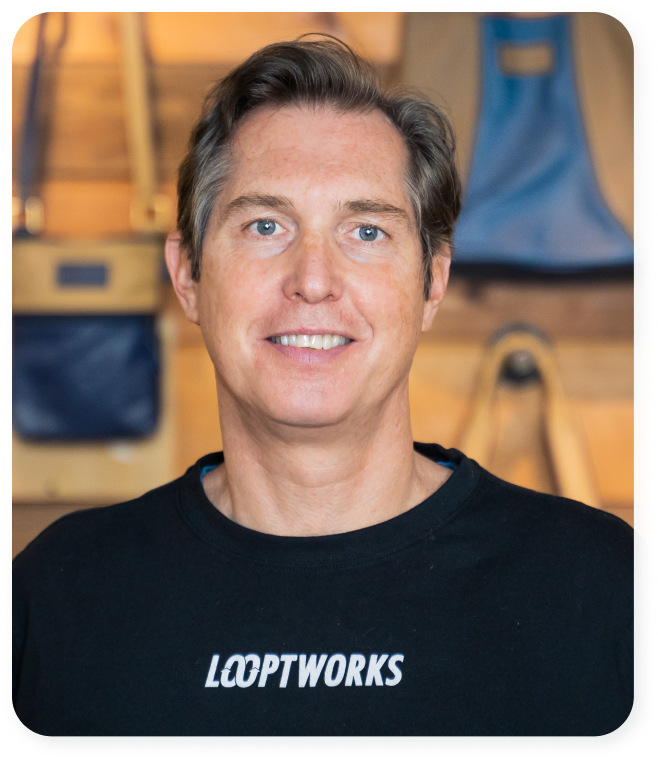
Scott is a visionary leader with more than 32 years of experience in strategic branding, innovative product creation, supply chain sustainability, and sales and marketing for global organizations. He founded Looptworks in 2009 as an industry solution for turning excess materials into upcycled consumer products. In 2022, Scott transitioned the company to a B2B business model focused on eliminating global textile waste through closed-loop solutions.
Scott is a visionary leader with more than 32 years of experience in strategic branding, innovative product creation, supply chain sustainability, and sales and marketing for global organizations. He founded Looptworks in 2009 as an industry solution for turning excess materials into upcycled consumer products. In 2022, Scott transitioned the company to a B2B business model focused on eliminating global textile waste through closed-loop solutions.