Building a Circular Future: Oregon Secretary of State Tobias Read Visits Looptworks
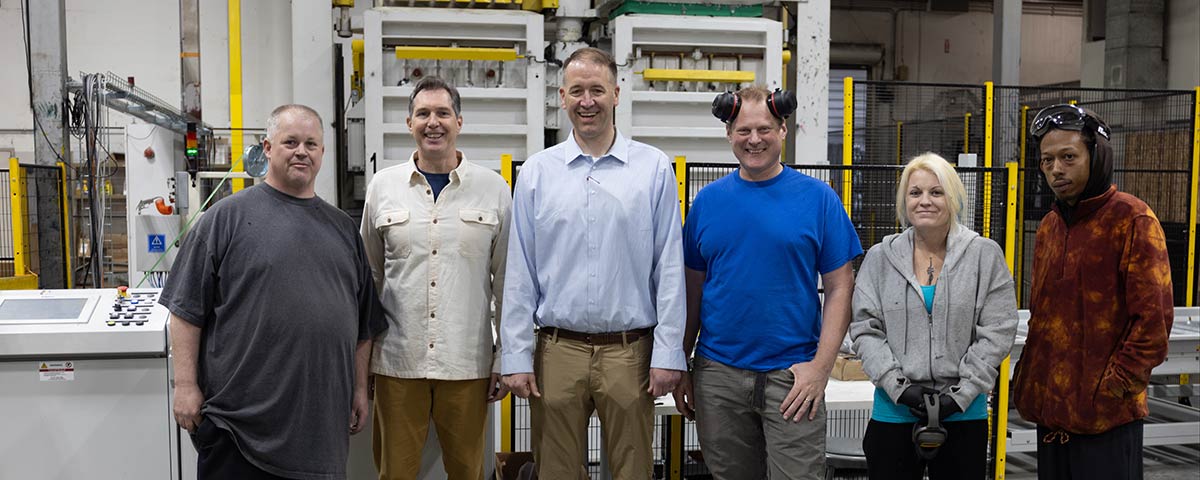
At Looptworks, we transform textile waste into high-quality recycled fiber, keeping materials in use and out of landfills. In May 2025, we welcomed Oregon Secretary of State Tobias Read to our Gresham facility to show how textile circularity works in action.
A Strong Partnership Between Government and Industry
During the visit, Secretary Read explored our facility and learned how we redirect excess textiles from waste streams into valuable resources. Moreover, he saw how our systems support Oregon’s broader sustainability goals, including lower water use and fewer carbon emissions. Importantly, this visit highlighted the crucial role that public-private collaboration plays in advancing circular economy solutions.
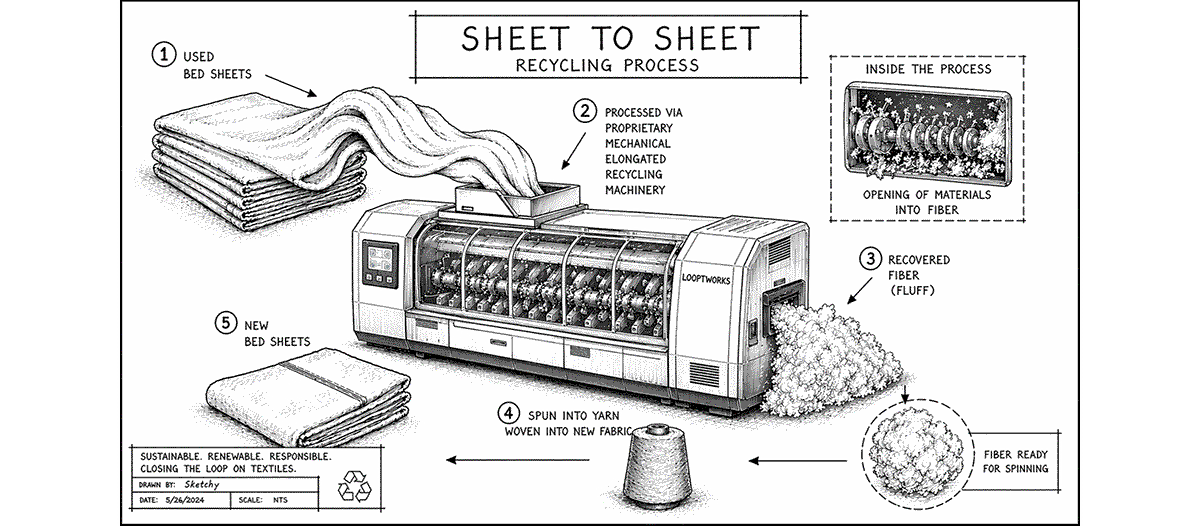
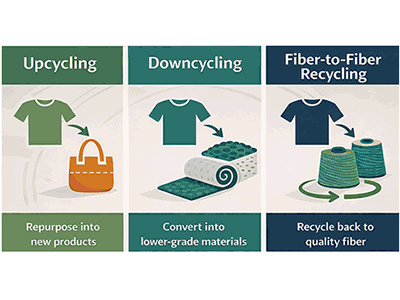
In addition, we discussed how textile circularity can reduce dependence on virgin materials. At our facility, teams intercept materials that would otherwise go to landfill or incineration. Then, we convert them into circular fiber that brands and manufacturers can use again. Thus, we create less waste and reduce environmental harm.
Textile Circularity Reduces Environmental Impact
Textile circularity delivers real environmental benefits. For example, using recycled fibers cuts water consumption and slash greenhouse gas emissions compared to new fiber production. Therefore, every pound of circular fiber we produce helps avoid environmental damage and strengthens resource efficiency.
Furthermore, Secretary Read saw how our systems can scale. Rather than remaining a niche solution, textile circularity can integrate into regional and national material ecosystems. In other words, circular systems have the potential to reshape how the textile industry operates.
Looking Ahead: Shared Commitment to Innovation
Looking ahead, we will build on the momentum of this visit. We remain committed to expanding our circular fiber systems and deepening partnerships with leaders who champion sustainable innovation. Together, we can accelerate the transition toward a circular textile future, where waste becomes a resource and materials stay in use longer.
Thank you to Secretary Tobias Read for joining us and supporting efforts to scale textile circularity in Oregon. Together, we are making meaningful progress — one reclaimed fiber at a time.
Ready to Advance Textile Circularity?
If your organization is exploring textile recycling, circular supply chains, or sustainable material recovery, Looptworks is ready to help turn waste into measurable impact.
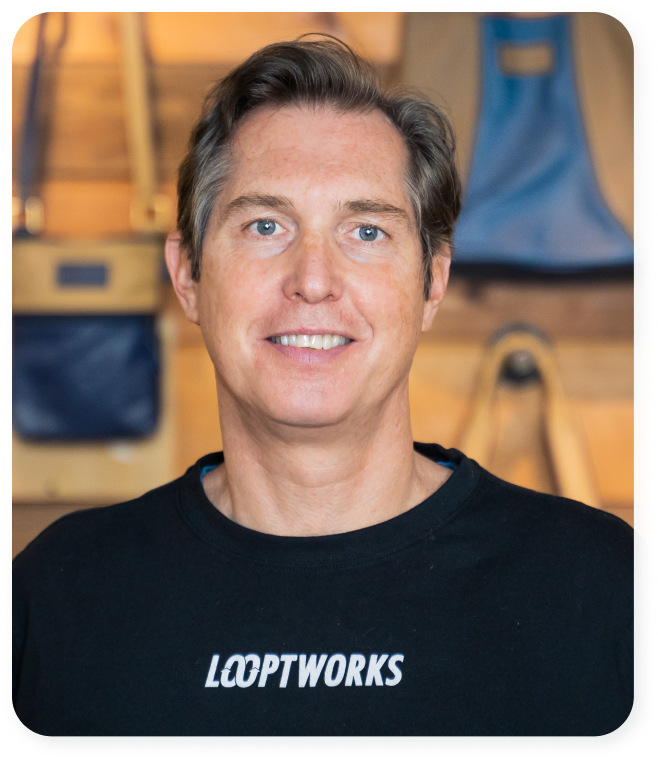
Scott is a visionary leader with more than 32 years of experience in strategic branding, innovative product creation, supply chain sustainability, and sales and marketing for global organizations. He founded Looptworks in 2009 as an industry solution for turning excess materials into upcycled consumer products. In 2022, Scott transitioned the company to a B2B business model focused on eliminating global textile waste through closed-loop solutions.
Scott Hamlin
Founder & CEO
Scott is a visionary leader with more than 32 years of experience in strategic branding, innovative product creation, supply chain sustainability, and sales and marketing for global organizations. He founded Looptworks in 2009 as an industry solution for turning excess materials into upcycled consumer products. In 2022, Scott transitioned the company to a B2B business model focused on eliminating global textile waste through closed-loop solutions.