
Supply chain sustainability starts with raw materials. Most textile supply chains still depend on virgin inputs. This creates cost pressure, supply risk, and environmental impact.
Recycled fiber offers a direct alternative. It replaces a portion of virgin textiles with recovered materials. It keeps fiber in use and reduces waste.
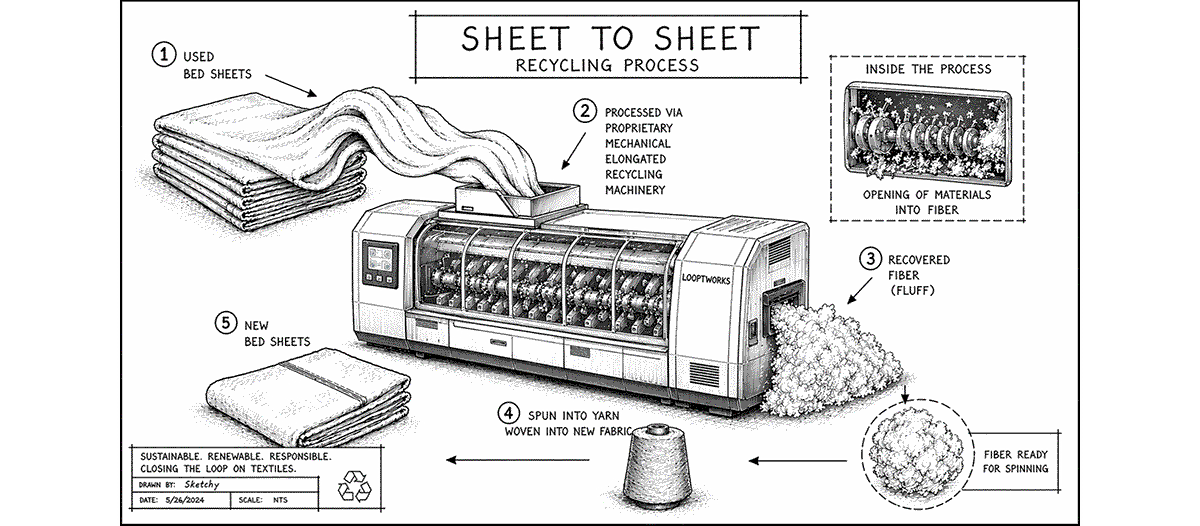
Looptworks converts pre- and post-consumer textiles into high-quality recycled fiber. These materials support nonwoven and yarn applications. This creates a stable and traceable input for modern supply chains.
Brands that reduce reliance on virgin textiles gain control. They reduce exposure to global volatility. They also improve measurable sustainability outcomes.
Supply chain sustainability means reducing environmental and operational risk across sourcing, production, and distribution.
In textiles, the largest impact comes from raw material production. Cotton farming uses large amounts of water and land. Synthetic fibers depend on fossil fuels.
A sustainable supply chain reduces this dependence. It replaces virgin inputs with recycled materials. It keeps resources in circulation.
This shift lowers emissions, reduces waste, and improves supply stability.
Virgin textile supply chains face constant disruption. Raw material prices change. Weather affects crop yields. Energy markets shift synthetic fiber costs.
These factors create uncertainty in sourcing and planning.
Virgin production also drives environmental impact. Water use, emissions, and waste all begin at this stage.
Once materials are used, most are discarded. This creates landfill pressure and lost value.
Brands that rely only on virgin inputs carry both cost and environmental risk.
Recycled fiber changes how materials flow through the system.
Textiles that would be discarded become usable inputs. This reduces the need for new raw materials.
Looptworks processes mixed and complex waste streams. This includes blended textiles that many systems reject. These materials are converted into consistent fiber outputs.
This creates a reliable and repeatable material source.
Recycled fiber supports better forecasting. It reduces exposure to external supply shocks. It also shortens supply chains when processed domestically.
Brands can take clear steps to reduce virgin material use.
Audit textile waste streams
Identify pre- and post-consumer materials available for recovery.
Introduce recycled fiber into product lines
Start with nonwoven applications or blended yarn systems.
Work with recyclers that accept mixed materials
Most waste is not clean or uniform. Processing capability matters.
Prioritize domestic processing where possible
Shorter supply chains improve speed and control.
Each step reduces dependence on raw material extraction.
Not all recycling systems deliver the same results. Many require clean, single-material inputs. This limits scale.
A strong partner should provide:
Ability to process blended textiles
Real-world waste includes mixed fibers. Processing flexibility increases recovery rates.
Consistent output quality
Recycled fiber must meet manufacturing requirements.
Operational scale
Processing capacity must match supply chain needs.
Traceability
Clear tracking supports reporting and compliance.
Looptworks meets these requirements. Our system processes diverse materials and delivers consistent, Made in USA fiber.
Many circular initiatives fail at execution.
Over-reliance on clean feedstock
Most waste streams do not meet strict input standards.
Lack of processing infrastructure
Collection without processing creates bottlenecks.
Inconsistent material output
Manufacturers need predictable inputs.
Limited scalability
Pilot programs do not support full supply chains.
A working circular system must handle real-world conditions at scale.
Replacing virgin materials reduces impact at the source.
Recycling lowers demand for water-intensive crops. It reduces reliance on fossil-based fibers. It also cuts emissions tied to raw material production.
Landfill diversion adds another benefit. Textiles remain in circulation instead of becoming waste.
These changes produce measurable results across carbon, water, and waste metrics.
A circular textile supply chain connects waste recovery with manufacturing.
Materials are collected, processed, and returned as usable fiber. This creates a continuous flow instead of a single-use system.
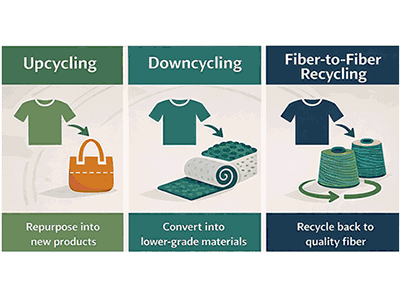
Looptworks supports this model through fiber-to-fiber recycling and downcycling. Our process handles a wide range of materials and returns them to the supply chain.
This is operational infrastructure, not a concept.
Supply chain performance depends on material strategy.
Brands that reduce virgin textile use gain stability. They improve cost control and reduce environmental impact.
Textile recycling provides a clear path forward. It turns waste into a reliable resource.
Looptworks works with brands, manufacturers, and institutions to process textile waste at scale. We deliver high-quality recycled fiber that supports circular supply chains.
If your organization is ready to reduce risk and improve sustainability, now is the time to act.
We’d love to hear from you!
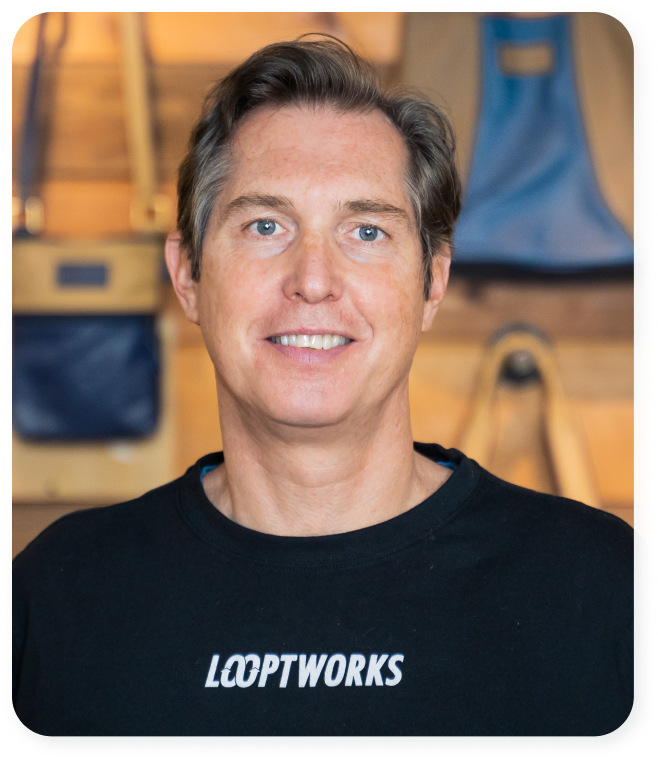
Scott is a visionary leader with more than 32 years of experience in strategic branding, innovative product creation, supply chain sustainability, and sales and marketing for global organizations. He founded Looptworks in 2009 as an industry solution for turning excess materials into upcycled consumer products. In 2022, Scott transitioned the company to a B2B business model focused on eliminating global textile waste through closed-loop solutions.
Scott is a visionary leader with more than 32 years of experience in strategic branding, innovative product creation, supply chain sustainability, and sales and marketing for global organizations. He founded Looptworks in 2009 as an industry solution for turning excess materials into upcycled consumer products. In 2022, Scott transitioned the company to a B2B business model focused on eliminating global textile waste through closed-loop solutions.