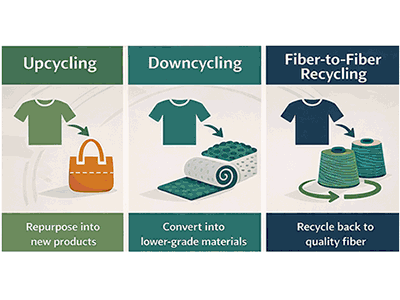

Textile recycling is often discussed in terms of waste reduction. That is only part of the story.
Most conversations focus on landfill diversion and environmental impact. Those outcomes matter. But they do not capture the full value of textile recycling.
For brands and manufacturers, the real advantage is operational. Textile recycling improves supply chain control. It reduces dependence on virgin materials. It creates new sources of value from existing waste.
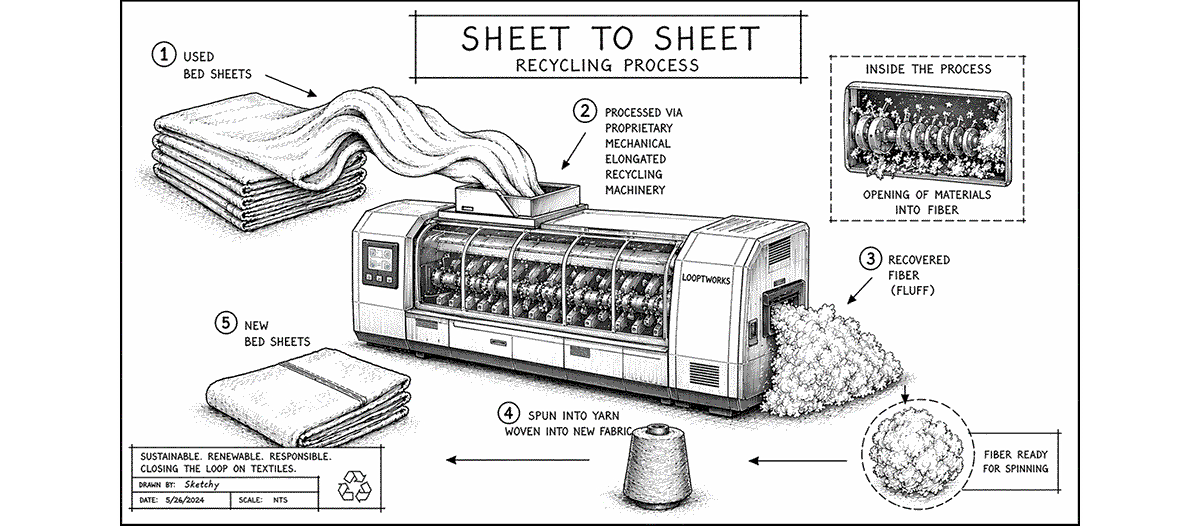
At Looptworks, we convert pre- and post-consumer textiles into high-quality recycled fiber. These materials support nonwoven and yarn applications. This creates measurable benefits across cost, sourcing, and sustainability.
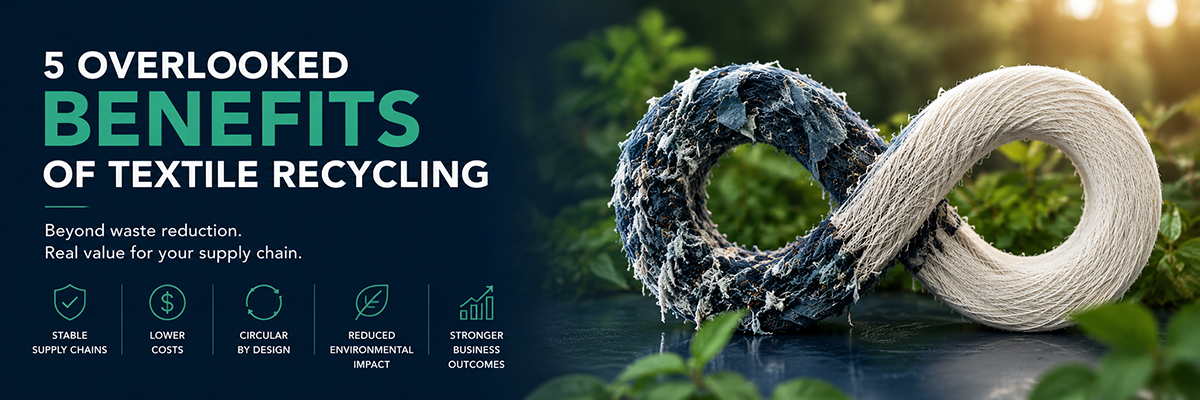
Here are five benefits that are often overlooked.
Most textile supply chains depend on virgin materials. These inputs are exposed to price shifts, weather conditions, and global logistics.
Recycled fiber changes that model.
Materials are sourced from existing waste streams. Processing happens closer to end markets. Output becomes more predictable.
This creates a more stable supply chain. It also improves planning and reduces disruption.
In many organizations, textile waste is treated as a cost. Unsold inventory, production scraps, and returns are often written off.
Recycling turns that cost into value.
Recovered materials become usable fiber. That fiber re-enters the supply chain as a productive input.
This shift changes how waste is viewed. It becomes a resource that supports future production.
Many recycling systems require clean, single-material inputs. Real-world textiles rarely meet that standard.
Blended fabrics are common across apparel and industrial products. These materials are often discarded.
Looptworks is designed to process mixed and blended textiles. This expands what can be recovered.
More material stays in circulation. Less is lost to landfill.
Long supply chains increase risk. They add transportation time, cost, and uncertainty.
Recycled fiber can be produced closer to where materials are collected.
Looptworks produces fiber in the United States. This shortens supply chains and improves speed. It also reduces transportation impact.
A more localized system supports faster decision-making and better control.
Virgin material costs fluctuate. These changes affect margins and sourcing strategies.
Recycled materials introduce a more controlled input stream.
By integrating recycled fiber, brands reduce exposure to raw material volatility. They also create consistency across sourcing.
This supports long-term cost management and operational resilience.
Textile recycling is often framed as a sustainability initiative. In reality, it is the supply chain infrastructure.
It connects waste recovery with manufacturing. It creates a continuous material flow instead of a single-use system.
This shift is already underway. Regulations are increasing. Brands are under pressure to manage end-of-life materials.
Companies that adopt recycling now gain an advantage. They build systems that support both performance and responsibility.
Every textile supply chain produces waste. The question is how that waste is managed.
Textile recycling provides a direct path forward. It reduces reliance on virgin materials. It recovers value from existing resources. It strengthens supply chain performance.
Looptworks works with brands, manufacturers, and institutions to process textile waste at scale. We turn discarded materials into high-quality recycled fiber.
If your organization is ready to improve supply chain stability and reduce waste, now is the time to act.
We’d love to hear from you!

Scott is a visionary leader with more than 32 years of experience in strategic branding, innovative product creation, supply chain sustainability, and sales and marketing for global organizations. He founded Looptworks in 2009 as an industry solution for turning excess materials into upcycled consumer products. In 2022, Scott transitioned the company to a B2B business model focused on eliminating global textile waste through closed-loop solutions.
Scott is a visionary leader with more than 32 years of experience in strategic branding, innovative product creation, supply chain sustainability, and sales and marketing for global organizations. He founded Looptworks in 2009 as an industry solution for turning excess materials into upcycled consumer products. In 2022, Scott transitioned the company to a B2B business model focused on eliminating global textile waste through closed-loop solutions.